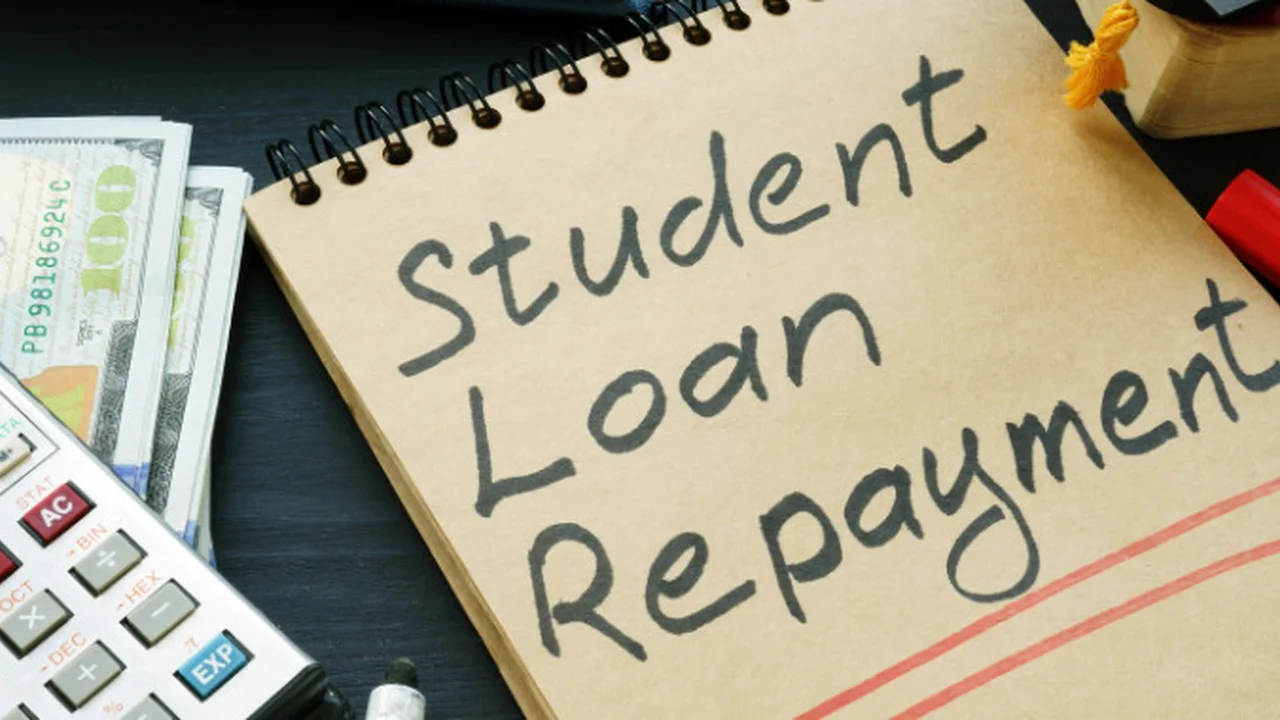
Understanding Student Loan Repayment Options
{ "article": [ { "title": "Understanding Student Loan Repayment Options", "meta_description": "Plan for your future with our guide to understanding student loan repayment options. Choose the best plan for your financial situation.", "content": "Plan for your future with our guide to understanding student loan repayment options. Choose the best plan for your financial situation.\n\n
\n\n
Hey there, future financial wizards! So, you've navigated the exciting (and sometimes daunting) world of student loans to fund your education. Congrats on that huge step! But now, as graduation looms or perhaps you're already out in the real world, a new question pops up: how exactly do you pay these things back? Don't sweat it! This isn't some super-secret financial code. We're going to break down student loan repayment options in a way that makes sense, helping you pick the best path for your unique financial situation. Think of this as your friendly guide to conquering student debt, one smart decision at a time.
\n\nFederal Student Loan Repayment Plans Exploring Your Choices
\n\nLet's kick things off with federal student loans. These are often the most common type, and thankfully, the U.S. Department of Education offers a bunch of flexible repayment plans. The goal here is to make sure you can afford your payments, even if your income isn't sky-high right after graduation. It's all about finding a plan that fits your budget and your long-term goals.
\n\nStandard Repayment Plan The Default Option Explained
\n\nThe Standard Repayment Plan is usually what you're automatically enrolled in. It's pretty straightforward: fixed monthly payments over a 10-year period. This plan is great if you can comfortably afford the payments because you'll pay the least amount of interest over the life of the loan. It's like a sprint to the finish line, getting you debt-free faster. However, those monthly payments can be higher compared to other plans, so it might not be the best fit if your starting salary is modest.
\n\nGraduated Repayment Plan Starting Small Growing Payments
\n\nFeeling a bit tight on cash right after college? The Graduated Repayment Plan might be your jam. With this plan, your payments start low and gradually increase every two years. It's still a 10-year plan, but it acknowledges that your income is likely to grow over time. This can be a lifesaver in those early career years when every dollar counts. The downside? You'll pay more interest overall compared to the Standard Plan because you're paying less upfront.
\n\nExtended Repayment Plan Stretching Out Your Payments
\n\nIf you have a larger loan balance (over $30,000 in federal direct loans or FFEL Program loans), the Extended Repayment Plan could be an option. This plan lets you stretch out your payments for up to 25 years, either with fixed or graduated payments. The big benefit here is significantly lower monthly payments, which can free up cash for other expenses. The trade-off, as you might guess, is paying a lot more in interest over that much longer period. It's a marathon, not a sprint, but sometimes that's exactly what you need.
\n\nIncome-Driven Repayment IDR Plans Tailored to Your Earnings
\n\nNow, let's talk about the real game-changers for many students: Income-Driven Repayment (IDR) plans. These plans calculate your monthly payment based on your income and family size, not just your loan balance. If your income is low, your payment could be as little as $0 per month! Plus, any remaining balance after 20 or 25 years (depending on the plan) is forgiven, though that forgiven amount might be taxed as income. IDR plans are a safety net, ensuring you don't default on your loans even if your financial situation is challenging.
\n\nRevised Pay As You Earn REPAYE The Most Common IDR
\n\nREPAYE is one of the most popular IDR plans. Your monthly payment is generally 10% of your discretionary income. It's available to most federal student loan borrowers. A cool feature of REPAYE is that if your calculated payment doesn't cover the interest that accrues, the government subsidizes a portion of that unpaid interest, which can save you money in the long run.
\n\nPay As You Earn PAYE A Good Option for Newer Borrowers
\n\nPAYE also caps your payments at 10% of your discretionary income, but it has a few key differences. To qualify, you generally need to be a new borrower (meaning you didn't have an outstanding balance on a Direct Loan or FFEL Program loan when you received a Direct Loan or FFEL Program loan on or after Oct. 1, 2007, and you received a Direct Loan on or after Oct. 1, 2011). The maximum payment under PAYE is capped at what your payment would be under the Standard Repayment Plan, which can be a nice safeguard if your income skyrockets.
\n\nIncome-Based Repayment IBR A Flexible Choice
\n\nIBR is another widely used IDR plan. Your payment is either 10% or 15% of your discretionary income, depending on when you took out your loans. Like PAYE, your payment is capped at the Standard Repayment amount. IBR is available to a broader range of borrowers than PAYE, making it a flexible choice for many.
\n\nIncome-Contingent Repayment ICR The Original IDR Plan
\n\nICR is the oldest IDR plan. Your payment is either 20% of your discretionary income or what you'd pay on a fixed 12-year payment plan, adjusted for income, whichever is less. It's available to all federal loan borrowers, including Parent PLUS loan borrowers (after consolidation). While it might have higher payments than other IDR plans for some, it's a solid option, especially for those with Parent PLUS loans.
\n\nPublic Service Loan Forgiveness PSLF A Path for Public Servants
\n\nIf you're working for a government agency or a qualifying non-profit organization, Public Service Loan Forgiveness (PSLF) could be a game-changer. After making 120 qualifying monthly payments (that's 10 years) under a qualifying repayment plan (usually an IDR plan) while working full-time for a qualifying employer, your remaining federal student loan balance can be forgiven, tax-free! This is a huge benefit for those dedicated to public service. It's crucial to make sure you meet all the strict requirements, so definitely look into the PSLF Help Tool on the Federal Student Aid website.
\n\nPrivate Student Loan Repayment Understanding Your Options
\n\nPrivate student loans are a different beast. They don't come with the same flexible repayment options or forgiveness programs as federal loans. Your repayment terms are set by the lender, and they can vary widely. Typically, you'll have a fixed repayment period, often 5, 10, or 15 years, with either fixed or variable interest rates.
\n\nRefinancing Private Student Loans Lowering Your Interest Rate
\n\nOne of the best strategies for private student loans is refinancing. This involves taking out a new loan, usually with a lower interest rate, to pay off your existing private loans. It's like getting a fresh start with better terms. Refinancing can significantly reduce your monthly payment and the total amount of interest you pay over time. However, you'll need a good credit score and a stable income to qualify for the best rates. Many lenders offer refinancing, and it's worth shopping around.
\n\nTop Refinancing Lenders and Their Offerings
\n\nWhen it comes to refinancing, there are several reputable lenders to consider. Each has its own set of pros and cons, eligibility requirements, and interest rates. It's always a good idea to get quotes from a few different places to compare.
\n\n- \n
- Sallie Mae: A well-known name in student loans, Sallie Mae offers competitive rates for refinancing. They have a variety of repayment terms and often provide a quick application process. They are known for their flexible repayment options, including interest-only payments for a period. \n
- SoFi: SoFi is a popular choice for refinancing due to its low rates and lack of fees. They also offer unemployment protection, which can be a huge relief if you lose your job. SoFi is known for its strong customer service and a streamlined online application. They often cater to borrowers with strong credit profiles and high earning potential. \n
- Earnest: Earnest stands out for its highly customizable repayment options. You can choose your exact payment amount to fit your budget, and they offer a bi-weekly payment option which can help you pay off your loan faster. They also have a unique 'skip a payment' feature, though interest still accrues. Earnest uses a holistic approach to underwriting, considering more than just your credit score. \n
- CommonBond: CommonBond offers competitive rates and a strong commitment to social impact (they fund education for children in need). They have a range of repayment terms and offer both fixed and variable rate options. They also provide a hybrid loan option, which starts with a fixed rate and then switches to a variable rate. \n
- Citizens Bank: Citizens Bank offers refinancing for both student and parent loans. They have competitive rates and offer a multi-year approval process for some loans. They also provide a loyalty discount for existing customers. Their application process is straightforward, and they have a good reputation for customer support. \n
Comparison Table: Refinancing Lenders (Illustrative, rates vary)
\n\n\n \n \n
\n\n\n
| Lender | \nTypical Fixed APR Range (Illustrative) | \nTypical Variable APR Range (Illustrative) | \nRepayment Terms (Years) | \nUnique Features | \n
|---|---|---|---|---|
| Sallie Mae | \n3.50% - 8.00% | \n2.00% - 7.50% | \n5, 10, 15 | \nInterest-only payment option, quick application | \n
| SoFi | \n3.25% - 7.75% | \n1.75% - 7.00% | \n5, 7, 10, 15, 20 | \nNo fees, unemployment protection, strong customer service | \n
| Earnest | \n3.40% - 7.90% | \n1.90% - 7.25% | \n5, 7, 10, 12, 15, 20 | \nCustomizable payments, skip a payment feature, holistic underwriting | \n
| CommonBond | \n3.60% - 8.10% | \n2.10% - 7.60% | \n5, 7, 10, 15, 20 | \nSocial impact, hybrid loan option | \n
| Citizens Bank | \n3.70% - 8.20% | \n2.20% - 7.70% | \n5, 10, 15, 20 | \nMulti-year approval, loyalty discount | \n
Important Note on Rates: The APR ranges provided above are illustrative and subject to change. Your actual rate will depend on your credit score, income, debt-to-income ratio, and the loan term you choose. Always check the lender's website for the most current rates and terms.
\n\nLoan Consolidation Simplifying Your Payments
\n\nFederal loan consolidation is different from refinancing. It combines multiple federal student loans into a single new Direct Consolidation Loan. This can simplify your payments by giving you just one bill instead of several. It can also extend your repayment period, lowering your monthly payment (though increasing total interest). The interest rate on a Direct Consolidation Loan is the weighted average of your old loans' interest rates, rounded up to the nearest one-eighth of a percentage point. It won't necessarily lower your interest rate, but it can open up eligibility for certain IDR plans or PSLF if your original loans weren't eligible.
\n\nDeferment and Forbearance Temporary Relief Options
\n\nLife happens, and sometimes you might face financial hardship. Federal student loans offer temporary relief options like deferment and forbearance. These allow you to temporarily postpone or reduce your loan payments.
\n\nDeferment Postponing Payments with Potential Interest Subsidies
\n\nDuring deferment, you can postpone payments for specific reasons, such as being enrolled in school at least half-time, unemployment, or economic hardship. The big perk of deferment is that for subsidized federal loans, the government pays the interest that accrues during the deferment period. This means your loan balance won't grow. For unsubsidized loans, interest will still accrue.
\n\nForbearance Temporary Payment Suspension
\n\nForbearance also allows you to temporarily stop or reduce payments, but interest always accrues on all loan types during forbearance. It's typically granted for situations not covered by deferment, like financial difficulties, medical expenses, or other reasons approved by your loan servicer. While it provides relief, it's generally a last resort because your loan balance will continue to grow.
\n\nChoosing the Right Repayment Plan Factors to Consider
\n\nSo, with all these options, how do you pick the right one? It's not a one-size-fits-all situation. Here are some key factors to consider:
\n\nYour Current Income and Future Earning Potential
\n\nIf you're just starting out with a lower income, an IDR plan might be your best friend. As your income grows, you might consider switching to a Standard or Graduated plan to pay off your loans faster and save on interest. Think about your career path and how quickly you expect your salary to increase.
\n\nTotal Loan Balance and Interest Rates
\n\nA higher loan balance might push you towards Extended or IDR plans to keep monthly payments manageable. If you have high-interest private loans, refinancing could be a priority. Always calculate the total interest paid over the life of the loan under different scenarios.
\n\nCareer Path and Public Service Goals
\n\nIf you're committed to a career in public service, actively pursuing PSLF from day one is crucial. Make sure you're on a qualifying repayment plan and working for a qualifying employer.
\n\nYour Financial Goals and Risk Tolerance
\n\nDo you want to be debt-free as quickly as possible, even if it means higher monthly payments? Or do you prefer lower payments now to focus on other financial goals like saving for a down payment or retirement? Your personal financial philosophy plays a big role.
\n\nUnderstanding the Impact of Interest Accrual
\n\nRemember, interest is the cost of borrowing money. Plans that extend your repayment period or have lower initial payments often result in more interest paid over time. Always weigh the benefit of lower monthly payments against the long-term cost of interest.
\n\nTools and Resources for Managing Your Loans
\n\nYou don't have to figure this out alone! There are fantastic tools and resources available to help you manage your student loans.
\n\nFederal Student Aid Website Your Go-To Resource
\n\nThe Federal Student Aid website (studentaid.gov) is your absolute best friend for federal loans. You can view your loan details, use their Loan Simulator to compare repayment plans, apply for IDR plans, and learn about PSLF. It's comprehensive and authoritative.
\n\nLoan Servicers Your Direct Contact
\n\nYour loan servicer is the company that handles your loan payments and provides customer service. They are your direct contact for questions about your specific loans, payment options, and applying for deferment or forbearance. Make sure you know who your servicer is (you can find this on studentaid.gov) and keep their contact information handy.
\n\nFinancial Advisors and Non-Profit Credit Counselors
\n\nIf your situation is complex, or you just want personalized advice, consider consulting a financial advisor who specializes in student loans or a non-profit credit counseling agency. They can help you analyze your situation and make informed decisions.
\n\nCommon Pitfalls to Avoid in Student Loan Repayment
\n\nWhile navigating student loan repayment, it's easy to stumble into some common traps. Being aware of these can save you a lot of headaches and money.
\n\nIgnoring Your Loans Don't Bury Your Head in the Sand
\n\nThe absolute worst thing you can do is ignore your student loans. Missing payments or defaulting can severely damage your credit score, lead to wage garnishment, and even impact your ability to get future loans or housing. If you're struggling, contact your loan servicer immediately to discuss options like IDR, deferment, or forbearance.
\n\nNot Understanding Your Repayment Plan
\n\nDon't just pick a plan and forget about it. Understand how your chosen plan works, what your payments will be, and how interest accrues. Review your plan periodically, especially if your income or family size changes.
\n\nFalling for Student Loan Scams
\n\nBe wary of companies that promise to "forgive" or "eliminate" your student loans for a fee. Many of these are scams. All federal loan services are free through the Department of Education or your loan servicer. Never pay for something you can do for free.
\n\nNot Recertifying Income for IDR Plans
\n\nIf you're on an IDR plan, you need to recertify your income and family size annually. If you miss this deadline, your payments could revert to the Standard Repayment amount, potentially causing a huge jump in your monthly bill. Set reminders!
\n\nRefinancing Federal Loans Without Understanding the Consequences
\n\nWhile refinancing private loans is often a good idea, refinancing federal loans into a private loan means losing all the federal benefits: access to IDR plans, deferment, forbearance, and potential forgiveness programs like PSLF. Only refinance federal loans if you are absolutely certain you won't need these protections.
\n\nFinal Thoughts on Your Student Loan Journey
\n\nManaging student loans might seem like a daunting task, but with the right information and a proactive approach, you can absolutely conquer it. Take the time to understand your options, utilize the available resources, and don't be afraid to ask for help if you need it. Your financial future is in your hands, and making smart choices about your student loans is a huge step towards achieving your goals. You've got this!
" } ] }:max_bytes(150000):strip_icc()/277019-baked-pork-chops-with-cream-of-mushroom-soup-DDMFS-beauty-4x3-BG-7505-5762b731cf30447d9cbbbbbf387beafa.jpg)