Guide to Salary Negotiation for Entry Level Positions
Secure fair compensation with our guide to salary negotiation for entry-level positions. Understand your worth and advocate for yourself.
Secure fair compensation with our guide to salary negotiation for entry-level positions. Understand your worth and advocate for yourself.
Guide to Salary Negotiation for Entry Level Positions
Understanding Your Worth Researching Entry Level Salaries
So, you've landed that first job offer – congratulations! It's an exciting time, but before you jump for joy and sign on the dotted line, let's talk about something crucial: salary negotiation. Many new graduates shy away from this, thinking they should just be grateful for any offer. But here's the truth: companies often expect you to negotiate. Leaving money on the table means you're starting your career at a disadvantage, and that gap can widen significantly over time. The first step in any successful negotiation is knowing your worth. This isn't about being greedy; it's about being informed and confident.
First, you need to research. And I mean *really* research. Don't just pull a number out of thin air. Look at industry averages, company size, location, and your specific skills. Websites like Glassdoor, LinkedIn Salary, and Payscale are your best friends here. They provide data based on reported salaries for similar roles. For example, if you're looking at a Junior Software Engineer role in San Francisco, the salary range will be vastly different from the same role in, say, Kansas City. Be specific with your search criteria: job title, years of experience (even if it's zero, some internships count!), and location.
Consider the company's size and type too. A startup might offer a lower base salary but more equity or stock options, while a large corporation might have a more rigid salary structure but better benefits. Don't forget to factor in the cost of living in the city where the job is located. A higher salary in a high-cost-of-living area might not go as far as a slightly lower salary in a more affordable city. Tools like Numbeo can help you compare living costs.
Preparing for Negotiation Gathering Your Data and Practice
Once you have a solid understanding of the market rate for your position, it's time to prepare your negotiation strategy. This isn't a spontaneous chat; it's a planned discussion. Think about your target salary range. It's always good to have a range, not a single number. For instance, if your research shows the average is $60,000, you might aim for $62,000-$68,000. Always aim for the higher end of your desired range, as the employer will likely counter with a slightly lower figure.
Beyond the base salary, consider the entire compensation package. This includes benefits like health insurance, retirement plans (401k matching!), paid time off, sick leave, and even perks like gym memberships or commuter benefits. For entry-level positions, professional development opportunities are incredibly valuable. Ask about tuition reimbursement, training programs, or conference attendance. These can significantly boost your long-term career prospects and are often negotiable.
Practice your pitch. Seriously, say it out loud. Rehearse what you'll say, how you'll articulate your value, and how you'll respond to potential counter-offers. Confidence is key, and practice builds confidence. You don't want to sound hesitant or unsure when the time comes. Think about your unique selling points: relevant coursework, internships, projects, or even soft skills like leadership and problem-solving. These are what differentiate you from other candidates.
The Negotiation Conversation Effective Communication Strategies
When the offer comes, thank them enthusiastically. Express your excitement about the opportunity. Then, and this is crucial, ask for time to review the offer. A day or two is perfectly reasonable. This gives you time to process, refine your strategy, and avoid making a hasty decision. Never accept or reject an offer on the spot.
When you're ready to negotiate, it's best to do it over the phone or in person, if possible. Email can be too impersonal and can lead to misunderstandings. Start by reiterating your enthusiasm for the role and the company. Then, politely state your case. For example, you might say, "Thank you so much for this exciting offer. I'm really looking forward to the possibility of joining [Company Name]. Based on my research into similar roles with my qualifications and the responsibilities outlined, I was hoping for a starting salary closer to [Your Desired Number]."
Be prepared to justify your request. This is where your research and your unique value come in. You might mention specific skills you bring, relevant projects, or even how your previous experiences align perfectly with the company's needs. Avoid making it sound like a demand. Frame it as a collaborative discussion. Listen carefully to their response. They might agree, make a counter-offer, or explain why they can't meet your request.
If they can't meet your salary request, pivot to other aspects of the compensation package. This is where those benefits and professional development opportunities come into play. You could say, "I understand. If there's flexibility on the base salary, I'd be very interested in discussing additional paid time off or opportunities for professional development, such as [specific training or conference]."
Common Negotiation Scenarios and How to Handle Them
Negotiations aren't always straightforward. Here are a few common scenarios you might encounter and how to navigate them:
Scenario 1 The First Offer is Below Your Expectation
This is common. Don't be discouraged. This is precisely why you negotiate. Respond with your desired range and justification, as discussed above. Be firm but polite. Remember, they offered you the job because they see value in you.
Scenario 2 They Say There's No Room for Negotiation
Sometimes, especially in very large companies or government roles, the salary might be non-negotiable. If this happens, don't give up entirely. Ask about other benefits. "I understand the base salary is fixed. Is there any flexibility regarding [signing bonus, relocation assistance, professional development budget, extra vacation days]?" Sometimes, they have other budgets they can tap into.
Scenario 3 You Have Multiple Offers
This is a great position to be in! You can leverage one offer to negotiate a better one. You can say, "I'm very excited about your offer, and I'm also considering another offer from [Company B] that includes a salary of [X amount] and [Y benefit]. While I'm very interested in [Company A], I'm hoping we can bridge that gap." Be honest but don't play games. Companies appreciate transparency.
Scenario 4 They Ask for Your Salary History or Expectations
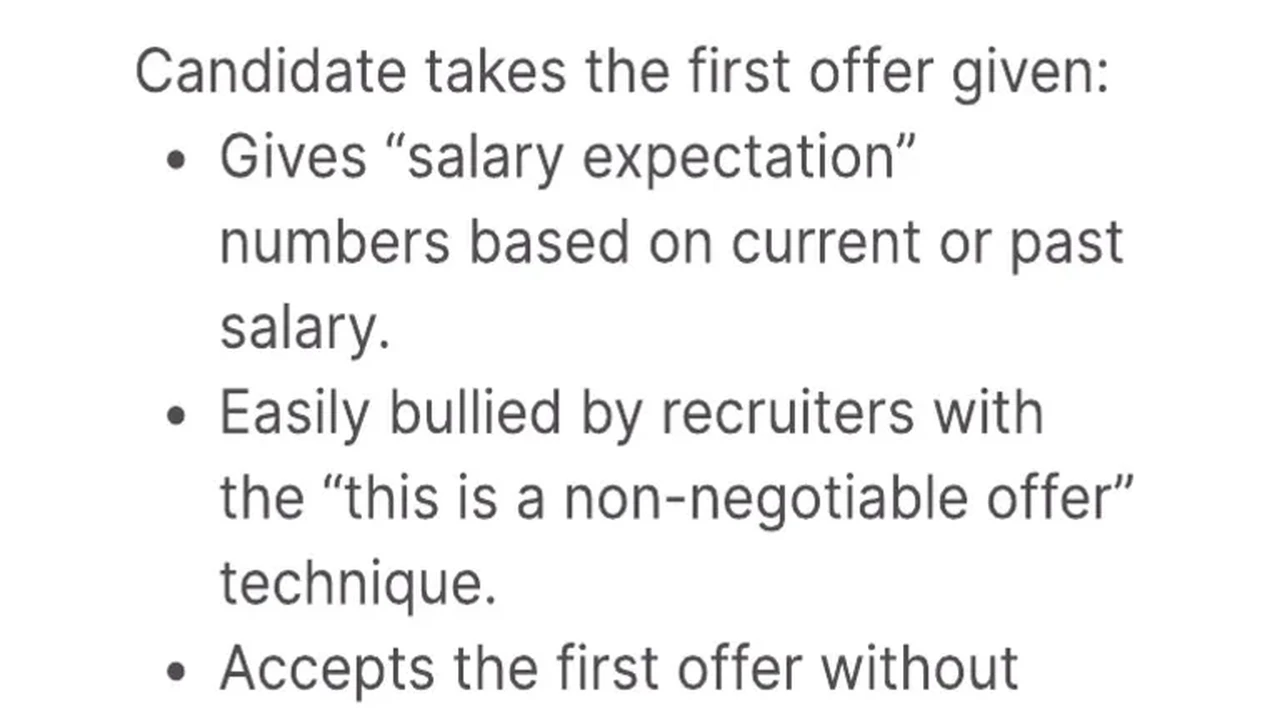
This is a tricky one, especially in some regions where it's illegal to ask for salary history. If they ask for your expectations early in the process, try to defer. "I'm more focused on finding the right fit for my skills and experience, and I'm confident that if we find that fit, we can agree on a fair compensation package." If pressed, provide a broad range based on your research, but try to get them to state their range first. If they ask for salary history, you can politely decline or state that you're looking for a role that aligns with current market rates for your skills.
Beyond Salary Negotiating Other Perks and Benefits
Remember, compensation is more than just your paycheck. For entry-level roles, especially, other benefits can be incredibly valuable. Let's look at some specific examples and how they compare:
Professional Development and Training
* Product A: Company-sponsored certifications (e.g., AWS Certified Solutions Architect, Google Project Management Professional). These can cost thousands of dollars if paid out-of-pocket. Negotiating for these means you gain valuable, marketable skills at no personal cost.
* Product B: Tuition reimbursement for further education (e.g., a Master's degree). Some companies offer partial or full reimbursement if the degree is relevant to your role. This is a huge long-term investment in your career.
* Product C: Conference attendance budget. Attending industry conferences (like SXSW for tech, or AIGA Design Conference for design) allows you to network, learn about new trends, and gain exposure. A typical conference ticket can range from $500 to $2000, plus travel and accommodation.
Comparison: Company A might offer specific tech certifications, great for IT roles. Company B might be better for those considering a Master's. Company C is excellent for networking and staying current. Always consider which type of professional development aligns best with your career goals.
Work-Life Balance Perks
* Product A: Flexible work hours or remote work options. This can save you significant commuting time and costs, and improve your overall quality of life. For example, if you save 2 hours of commuting daily, that's 10 hours a week you get back!
* Product B: Additional paid time off (PTO). Standard might be 10-15 days. Negotiating for an extra 5 days can be incredibly valuable for travel or personal time. The monetary value of an extra week of PTO for a $60,000 salary is roughly $1,150.
* Product C: Wellness stipends or gym memberships. Some companies offer a monthly stipend (e.g., $50-$100) for gym memberships, fitness classes, or mental health apps. This promotes employee well-being.
Comparison: If commuting is a major concern, Product A is gold. If you value vacations, Product B is key. Product C shows a company's commitment to employee health.
Financial Benefits Beyond Base Salary
* Product A: Signing bonus. This is a one-time payment upon joining. For entry-level roles, these can range from $1,000 to $5,000, sometimes more for highly competitive fields. This can help with relocation costs or initial expenses.
* Product B: Relocation assistance. If you're moving for the job, some companies offer a lump sum or cover specific moving expenses. This can save you thousands of dollars.
* Product C: Stock options or Restricted Stock Units (RSUs). More common in tech startups or larger public companies. While the value can fluctuate, it offers a stake in the company's success. For example, a grant of 100 RSUs at a $50 stock price is worth $5,000, vesting over several years.
Comparison: Product A is immediate cash. Product B is crucial if you're moving. Product C offers long-term potential but comes with more risk.
Final Thoughts on Accepting or Declining an Offer
Once you've negotiated and received a final offer, take your time to review it thoroughly. Don't feel pressured to accept on the spot. Consider all aspects of the compensation package, not just the base salary. Does it meet your financial needs? Does it align with your career goals? Are the benefits what you're looking for?
If you decide to accept, do so enthusiastically and professionally. Confirm the terms in writing. If you decide to decline, do so politely and professionally. Thank them for their time and the offer. You never know when your paths might cross again in the future.
Remember, negotiation is a skill that improves with practice. Your first negotiation might feel daunting, but it's a crucial step in advocating for yourself and setting the stage for a successful career. You've worked hard to get this far; now, make sure you're compensated fairly for your value.
:max_bytes(150000):strip_icc()/277019-baked-pork-chops-with-cream-of-mushroom-soup-DDMFS-beauty-4x3-BG-7505-5762b731cf30447d9cbbbbbf387beafa.jpg)